

What Is a Hand Truck? Definition, Design, and How It Works
A hand truck — also referred to as a two-wheeler, sack truck, or utility dolly — is an L-shaped material handling tool designed to move heavy or stacked items with minimal physical effort. Its core structure consists of three elements: a vertical metal frame with an upright handle at the top, two large rear wheels positioned at the base, and a small horizontal toe plate (or nose plate) at the bottom that slides beneath the load.
The operating principle is simple and effective. Once the toe plate is positioned under the item, the operator tilts the frame backward so the load rests against the vertical backplate and balances over the two wheels. This shifts the item's weight onto the axle, allowing a single person to transport loads far heavier than they could carry by hand — with a drastically reduced risk of back strain or injury.
Hand trucks are available in several configurations to match different handling requirements:
- Upright (Utility) Hand Truck — The standard design, ideal for moving boxes, crates, and small appliances over short distances. Load capacities typically range from 150 lbs to 700 lbs depending on frame gauge and wheel size.
- Appliance Hand Truck — A reinforced version with integrated straps, side rails, and stair-climbing wheels. Built specifically for moving large appliances such as refrigerators, washing machines, and vending machines — with capacities reaching 1,000 lbs or more.
- Convertible Hand Truck — Features a collapsible platform that transforms the two-wheel upright design into a four-wheel flatbed cart. This versatility makes it one of the most practical choices for operations that handle a mix of tall stacked loads and wider flat items.
- Stair-Climbing Hand Truck — Equipped with a tri-star or motorized wheel assembly that allows the truck to navigate stairs without tilting or manually lifting the load at each step.
The hand truck's upright design gives it a critical advantage in confined environments: it can pass through standard doorways, navigate narrow warehouse aisles, and change direction in tight corridors — all while keeping the load stable and controlled.
What Is a Dolly? How It Differs in Design and Use
A dolly — also called a platform dolly, moving dolly, or furniture dolly — is a flat, low-profile platform mounted on four wheels and two axles. Unlike a hand truck, a dolly has no vertical frame and no handle. The user either pushes the load directly or pushes the items stacked on the platform surface. Some dolly models include a short horizontal handle or push bar, but the defining characteristic remains the flat, four-wheeled platform base.
The four-wheel layout distributes weight evenly across a broad footprint, giving dollies exceptional stability when carrying large, irregularly shaped, or extremely heavy items that a two-wheeled hand truck could not safely balance. Most models feature swivel casters with ball bearings, allowing full 360-degree rotation and smooth directional change — an advantage in open warehouse or exhibition floor environments.
Because the platform sits elevated above floor level, items must be lifted onto the dolly rather than tilted onto it. This is the single most important practical distinction between the two tool types: the hand truck comes to the load; the load must come to the dolly.
Common dolly types include:
- Furniture Dolly — A flat hardwood or steel platform with four corner casters, designed for sofas, cabinets, heavy machinery bases, and palletized goods.
- Drum Dolly — A heavy-duty steel frame with a raised circular cradle designed to hold and transport 30- or 55-gallon industrial drums of oil, chemicals, or dry bulk material.
- Carpeted Dolly — Features a padded or carpeted deck surface to protect delicate items — such as electronics, glass panels, or finished furniture — from surface scratches during transport.
- Pallet Dolly — A low, heavy-duty steel platform designed to move standard wooden or plastic pallets in tight spaces where a full pallet jack cannot operate effectively.
Hand Truck vs Dolly: A Side-by-Side Comparison
Despite serving the same broad purpose — reducing the physical effort required to move heavy items — hand trucks and dollies differ substantially across several performance dimensions. The table below provides a direct comparison of the most decision-relevant factors.
| Factor | Hand Truck | Dolly |
|---|---|---|
| Wheel count | 2 (rear axle) | 4 (swivel casters) |
| Loading method | Slide under load, no lifting required | Load must be lifted onto platform |
| Typical load capacity | 150 – 1,000+ lbs | 300 – 2,000+ lbs |
| Stability | Good for tall vertical loads | Excellent for wide, flat, or irregular loads |
| Maneuverability | Excellent in narrow, confined spaces | Better in open, flat-floor environments |
| Stair capability | Yes (with stair-climbing models) | Generally not suitable for stairs |
| Best for | Stacked boxes, tall appliances, vertical loads | Furniture, machinery bases, large flat items |
| Storage footprint | Compact (leans against wall) | Larger flat footprint required |
In summary: choose a hand truck when load height, stair access, or narrow passageways are limiting factors. Choose a dolly when load width, weight, or the need for multi-directional movement on flat surfaces is the priority.
Material Matters: Steel vs Aluminum Hand Trucks and Dollies
Beyond design type, the material from which a hand truck or dolly is constructed has a direct impact on its performance, weight, service life, and total cost of ownership. As a metal product manufacturer, Bintai works with both steel and aluminum alloy frames — and the choice between them is not trivial.
Steel hand trucks and dollies offer superior load-bearing capacity and impact resistance. Heavy-gauge steel frames can support loads exceeding 1,000 lbs without flexing, making them the preferred choice for industrial warehouses, freight handling, and manufacturing environments. Steel is also more resistant to deformation under repeated side loads or accidental impacts. The trade-off is weight: a standard steel hand truck typically weighs between 18 and 35 lbs, which matters when operators are lifting, stacking, or loading the truck onto vehicles multiple times per day.
Aluminum alloy hand trucks offer a compelling alternative for operations that prioritize operator ergonomics and portability. Aluminum frames weigh roughly 30–40% less than their steel equivalents while still achieving load capacities of 500–700 lbs in most commercial configurations. The reduced tare weight translates directly to lower cumulative operator fatigue over a full working shift — a measurable factor in high-frequency logistics, delivery services, and event logistics. Aluminum also offers inherent corrosion resistance, making it suitable for outdoor use, cold storage environments, and coastal or humid industrial settings where untreated steel would require additional surface protection.
For dollies, steel-framed platforms with hardwood or steel decking remain the standard for heavy industrial use. Carpeted or rubber-decked dollies typically use lighter steel or aluminum corner frames with a composite or plywood deck, providing surface protection without sacrificing structural integrity.
A practical decision framework: if the primary operating environment is a fixed indoor warehouse with consistent heavy loads, steel is the right material. If the equipment travels between locations, is loaded into vehicles frequently, or is handled by a rotating workforce, aluminum provides a meaningful ergonomic and logistical advantage.
Which One Should You Choose? Matching the Tool to the Task
The right choice between a hand truck and a dolly depends on four practical variables: the nature of the load, the operating environment, the frequency of use, and the available workforce. The following scenarios illustrate how these variables drive the decision.
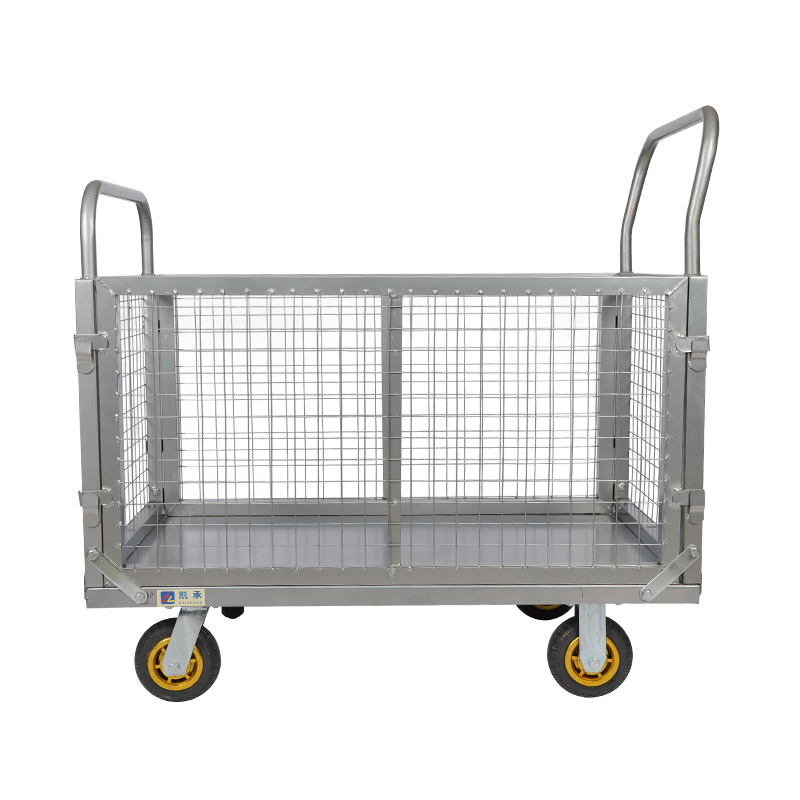
- Warehouse and distribution center — For facilities moving stacked cartons along narrow racking aisles, an upright hand truck handles daily picking and replenishment efficiently. For moving heavy machinery bases, large pallet loads, or wide equipment on open warehouse floors, a heavy-duty steel dolly provides the stability and capacity needed. Many facilities benefit from maintaining both types. A metal foldable trolley can also complement both tools for logistics transport with fence-sided containment.
- Retail and commercial delivery — Appliance delivery teams rely on heavy-duty appliance hand trucks with straps and stair-climbing capability. A dolly is impractical for stairwell navigation and provides no load-securing mechanism — making the hand truck the clear choice for last-mile appliance and equipment delivery.
- Office and residential relocation — A convertible hand truck offers the best of both tools: it handles stacked boxes upright through narrow hallways and converts to a four-wheel platform for bulky furniture on flat surfaces. This eliminates the need to carry two separate tools.
- Manufacturing and industrial facilities — Drum dollies are indispensable for moving barrels of chemicals, lubricants, or raw materials across factory floors. For moving sub-assemblies or machine components between workstations, a low-profile steel furniture dolly reduces the risk of tipping compared to a hand truck.
- Exhibition and events — Dollies dominate in exhibition logistics, where large display structures, AV equipment cases, and stage components need to be moved efficiently across level floor surfaces. The swivel-caster design enables precise positioning in tight booth configurations.
OEM Customization: Getting the Right Specs for Your Business
For many logistics operators, retailers, and equipment rental companies, off-the-shelf hand trucks and dollies do not fully match their specific requirements. Load capacity, frame dimensions, wheel type, handle height, folding mechanism, and surface finish may all need to be adjusted to align with a particular workflow or brand specification.
As a metal product OEM and ODM manufacturer, Bintai Machinery designs and produces hand trucks, platform dollies, and material handling carts to custom specifications. Engineering capabilities include adjustments to frame gauge and alloy grade, toe plate dimensions, wheel and caster specifications, surface treatment (powder coat, galvanizing, or chrome), and folding or collapsible frame mechanisms for storage-efficient designs.
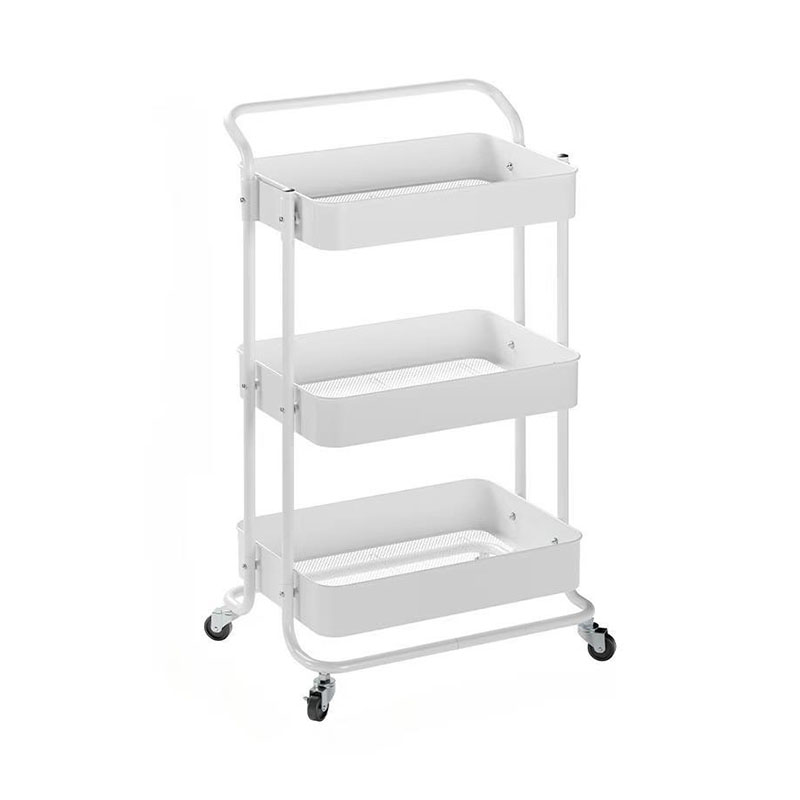
For businesses requiring a multi-tier handling solution — combining transport capability with on-site storage — the mobile trolley shelf integrates shelving and mobility in a single steel unit, suitable for retail backrooms, workshop environments, and hospitality logistics.
Whether you require a standardized high-volume production run or a tailored design for a niche application, the right specification starts with understanding the load, the environment, and the operator. Bintai's engineering team works directly with procurement and logistics teams to develop solutions that match real operational requirements — not generic catalog specifications.


